Pick from our related articles...


You can find us on
Keep yourself up to date with Let's Recycle It latest news
Kidlington Illegal Waste Site Delays | Let’s Recycle It
Kidlington Illegal Waste Site Clearance Delayed
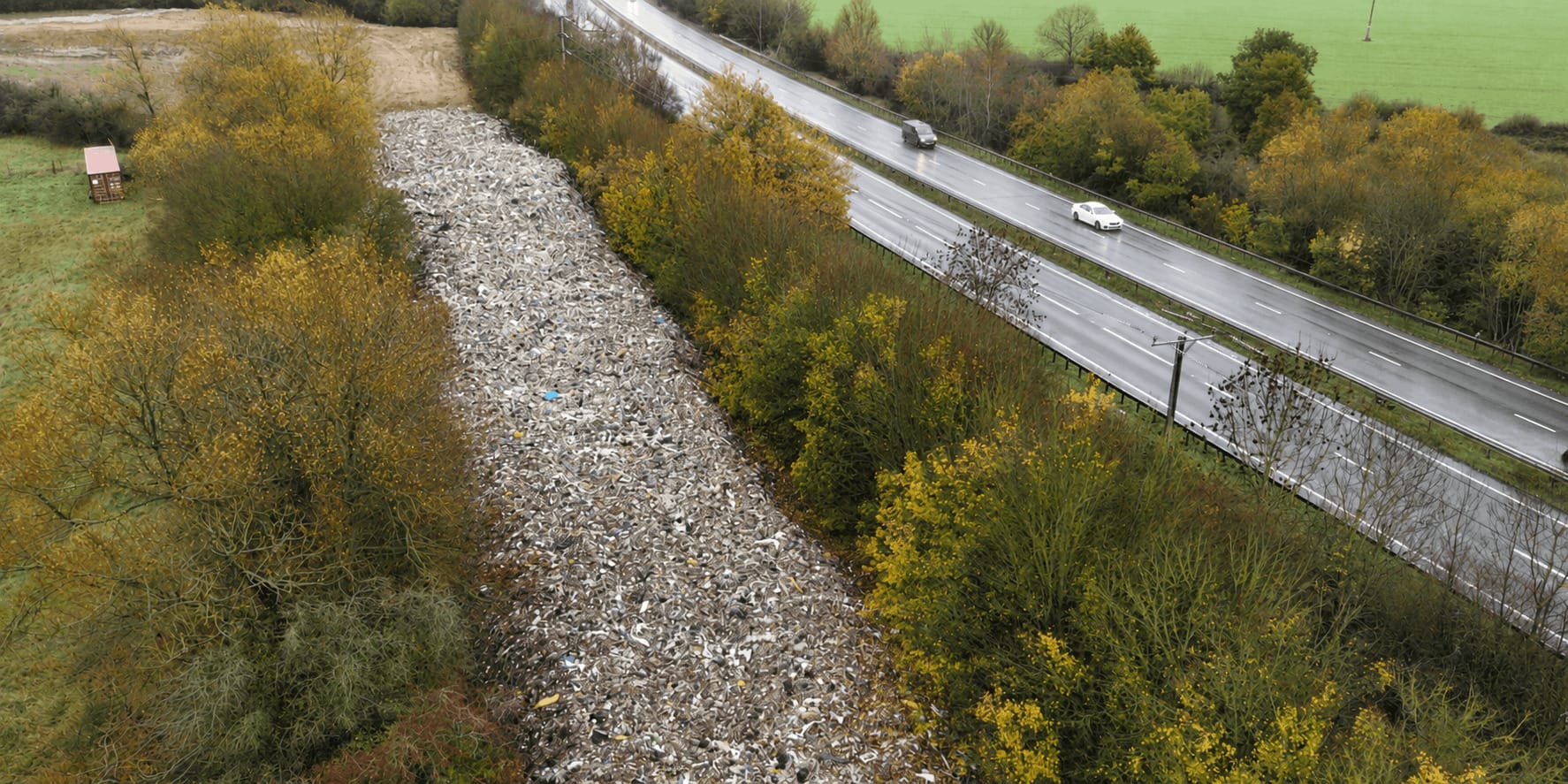
The 20,000-tonne illegal waste site near the River Cherwell in Kidlington was due to move into full clearance at the end of February. Instead, heavy rainfall has pushed the timetable back. Ground conditions are unstable. Heavy plant cannot safely access the site. What should have marked the beginning of removal has become another pause.
The Environment Agency has confirmed that preliminary works began in January. Trees and shrubs affected by the waste were cleared. Access to the site was restricted. Sandbags were installed to reduce the risk of leaching towards the river. Water sampling has so far found no evidence of pollution caused by the waste itself.
That is the technical position.
The practical one is harder to ignore. A vast mound of mixed waste remains on a floodplain. The clock is still running.
Ministerial estimates suggest clearance will take six to nine months once fully underway. That assumes stable conditions. For residents, landowners and legitimate waste operators in the region, the delay is not just inconvenient. It prolongs risk and uncertainty.
Environmental Harm From Illegal Waste Site Delays
A delay does not freeze a site in time. Risk shifts with weather and circumstance.
Prolonged rainfall places pressure on containment measures. Even with monitoring in place, a large mass of mixed waste sitting near a river is never a static situation. Temporary mitigation is exactly that – temporary.
Fire risk also persists. Compacted mixed waste can self-heat. If ignition occurs, smoke travels. It does not stop neatly at a fence line. It settles over homes, roads and fields. A controlled removal becomes an emergency response.
There is also the quieter damage. Vegetation loss. Soil degradation. Traffic disruption. Reputational harm to a community that did not choose to host a waste mountain.
The longer a site remains, the more embedded the consequences become.
Illegal Waste Site Dumping In England
Kidlington is not an anomaly. It is a visible example of a wider structural problem.
Recent figures show hundreds of active illegal waste sites in England, with a significant proportion categorised as high risk. Local authorities continue to deal with well over a million fly-tipping incidents each year. Enforcement agencies acknowledge that waste crime remains under-reported.
When it comes to illegal waste sites, there are two ends to the spectrum.
At one end, a mattress left on a verge.
At the other, industrial-scale deposits of tens of thousands of tonnes, moved in organised loads, often accompanied by paperwork that appears legitimate.
The Kidlington illegal waste site belongs firmly to the latter.
Organised Waste Crime And Weak Waste Chains
Large illegal sites do not fill up by accident.
Material is collected. Transported. Invoiced. Someone pays less than they would have paid through a fully compliant route. Someone else benefits.
Waste crime thrives in weak systems:
- Cost pressure on disposal
- Poor segregation at source
- Minimal scrutiny of carriers and brokers
- Limited visibility beyond the first collection
- Fragmented responsibility across landowners and regulators
When margins are tight, a low price can override deeper questions. By the time material resurfaces on farmland or beside a river, the decisions that allowed it have long been made elsewhere.
That is the uncomfortable truth behind Kidlington. Illegal sites are the end result of failures much further upstream.
Poor Waste Management Creates Opportunity
Most businesses do not intend to contribute to waste crime such as these illegal waste sites. But poor practice opens doors.
Mixed loads with contamination reduce legitimate recovery options. Wet or poorly baled plastics lose value. Rejected loads become urgent problems. Urgency creates vulnerability.
Another common gap is downstream assurance. Many organisations know who collects their waste. Fewer can confidently explain where it ultimately ends up beyond that first handover.
In a strong waste chain, the route is clear. In a weak one, there is a blind corner. That blind corner is where diversion happens and how these illegal waste sites often appear.
How Let’s Recycle It Strengthens The Waste Chain
This is precisely where Let’s Recycle It operates.
Let’s Recycle It works with businesses across Ireland, the UK and mainland Europe to manage plastic scrap and packaging waste streams properly from the outset. Its focus is practical: clear identification, clean segregation, and defined, compliant routing to appropriate end destinations.
Working with Let’s Recycle It means waste is not treated as an afterthought. Streams are mapped. Volumes are understood. Collection routes are structured. Documentation is kept tight. End markets are known.
The objective is simple. Keep material inside the legitimate system. Remove ambiguity. Remove blind corners.
Kidlington is what happens when that chain breaks. Let’s Recycle It exists to prevent that break and these illegal waste sites from occurring in the first place.
Financial Benefits Of Working With Let’s Recycle It
There is a persistent assumption that strict compliance costs more. In reality, disorder costs more.
Rejected loads. Emergency call-outs. Storage overflow. Disputes over contamination. Administrative time chasing paperwork. Reputational risk.
Let’s Recycle It assists businesses in turning waste into a controlled process rather than a recurring problem. Clean LDPE film, HDPE packaging, PP materials and other defined plastic streams retain value. Mixed, damp or poorly segregated waste becomes a liability.
By ensuring streams are properly defined and presented, Let’s Recycle It improves pricing stability and outlet reliability. Businesses are less exposed to sudden rejections and last-minute negotiations.
Certainty has financial value. In a volatile market, predictable routing and known outlets reduce risk.
Operational Efficiency In Waste Management
Waste is rarely the core activity of a manufacturer, distributor or packaging operation. It is a by-product. The aim is to manage it with minimal friction.
Let’s Recycle It assists businesses by simplifying fragmented waste arrangements. Instead of juggling multiple collectors and uncertain routes, clients benefit from coordinated management of plastic waste streams through a single structured approach.
A proper waste audit often reveals straightforward improvements:
- Cleaner segregation on site
- Better storage practices
- More suitable collection frequencies
- Recovery routes for previously overlooked grades
Small operational corrections compound over time. Fewer emergencies. Less wasted space. Less time lost to preventable problems.
Efficiency is not dramatic. It is dependable.
Environmental Benefits Of Proper Routing
Environmental claims are easy to make. They are harder to prove.
Working with Let’s Recycle It reduces the likelihood of diversion into illegal channels by maintaining visibility across the chain. When material is tracked, documented and placed with appropriate end destinations, it becomes far more difficult for it to disappear.
Let’s Recycle It also supports the supply of recycled pellets, including HDPE, LDPE and PP, into manufacturing. That demand-side link matters. When secondary materials have consistent markets, the recovery system strengthens overall.
Environmental protection, in this context, is not abstract. It is procedural. It is about making sure material leaves a site properly and arrives where it should.
Compliance And Downstream Assurance
Waste compliance is not about slogans. It is about traceability.
Let’s Recycle It assists businesses by maintaining clarity over where waste goes and how it is processed. Working with accredited end destinations and keeping documentation robust reduces exposure to reputational and regulatory risk.
A headline like Kidlington damages more than one organisation. Even an indirect link to an illegal site can raise difficult questions.
Downstream assurance is how those questions are avoided.
Kidlington As A Warning
Kidlington shows how quickly material can accumulate outside the permitted system. It shows how long removal can take. It shows how weather, geography and public scrutiny amplify consequences.
It also shows the cost of failure. Investigations. Arrests. Months of remediation. Public resources committed to clearing a problem that should never have existed.
The more important question is not how long the clean-up will take. It is how the material arrived there at all.
For most businesses, prevention lies in everyday decisions: who collects, how material is segregated, whether routes are verified, whether documentation is scrutinised.
Let’s Recycle It operates precisely in that space — upstream, before waste becomes someone else’s emergency.
A Sensible Next Step
Waste management does not attract attention when it is handled properly. It is quiet, structured and uneventful.
When it fails, it becomes an illegal waste site – mound beside a river.
For organisations generating significant volumes of plastic or packaging waste, reviewing routing, segregation and downstream visibility is not dramatic work. It is careful work. And careful work tends to pay for itself.
Kidlington will eventually be cleared. A stronger outcome is ensuring that material leaving your site is managed in a way that never contributes to the next one.
Let’s Recycle It is built around that principle.
Follow us to stay up to date on our latest news
If you would like to receive our newsletter to keep up to date with Let’s Recycle It news and to receive marketing information regarding our services, please let us know: